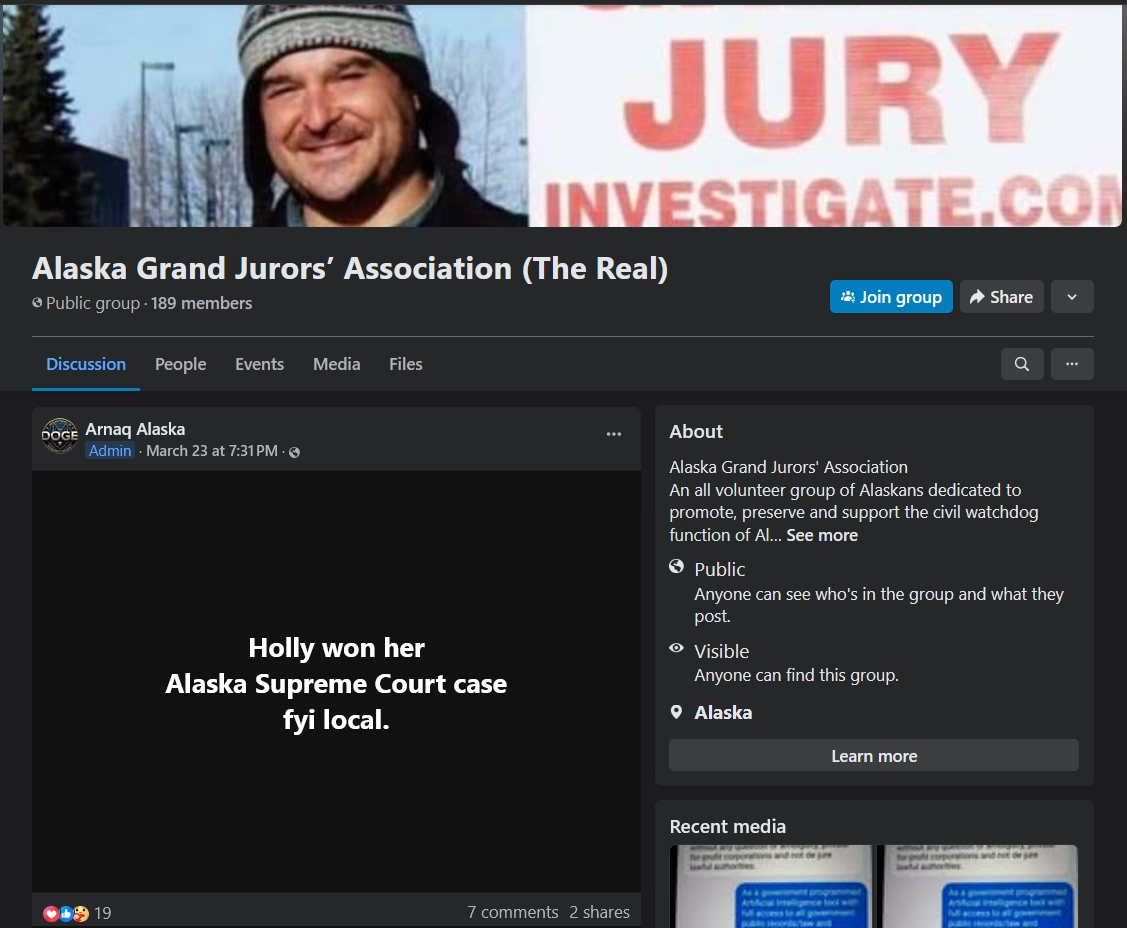
A Legal Battle With Heavy Losses…
In her long-standing malpractice lawsuit against the law firm Birch Horton Bittner & Cherot (BHBC), Alaska resident Holly Sheldon-Lee faced a mixed but sobering outcome from the Alaska Supreme Court. Though the high court revived parts of her case by embracing a new legal doctrine—the continuous representation rule—Ms. Lee suffered key defeats on some of the most consequential legal fronts.
Let’s cut through the legal jargon and focus on where things didn’t go her way. While it’s tempting to see a partial reversal as a win, in the game of law, even one procedural loss can sink an entire ship.
1. Statute of Limitations – Discovery Rule Loss
This was a foundational blow. Ms. Lee claimed that she didn’t realize she had a malpractice case until she met with a second lawyer in 2018. But the court wasn’t buying it. The justices ruled that she reasonably should have known she had a problem back in 2015, right after the mediation, or at the very latest by August 3, 2016, when the trial court ruled against her.
Why does that matter? Because Alaska law gives you just three years to file a legal malpractice suit. She waited until 2020. So unless some exception applied, she was out of time.
Advertisement: Be a voice for the voiceless! With your donation, we can continue the fight to protect life from conception to natural death. Your generosity helps us advocate for laws that value life and support mothers in need. Join the Fight for Life – Donate Now!.
What this means: The court rejected her argument that she only “discovered” the problem years later. Ignorance of the law—or regret over a bad outcome—is not enough to toll the statute. This set the stage for the rest of the fight.
2. Equitable Estoppel – Conflict of Interest Defense Fails
Ms. Lee alleged that her former lawyers had conflicts of interest, including ties to her adversaries, and failed to tell her about them. She argued this deceit should have blocked them from using the statute of limitations defense. It’s a serious accusation: if a law firm hides a conflict, they may lose the right to dodge a malpractice suit based on timing.
But here’s the rub—you have to prove that you relied on the concealment when choosing not to sue earlier. And the court found she didn’t.


Bottom line: Even if there were undisclosed conflicts, Ms. Lee didn’t show that she delayed filing her lawsuit because of those secrets. That means the firm is still free to argue her case was filed too late.
3. Initial Ruling Against Amending Her Complaint
Though this was eventually reversed, let’s not gloss over it: Ms. Lee originally lost the right to amend her complaint. She tried to add a new claim demanding BHBC refund her legal fees based on their alleged conflicts of interest. But the lower court shut that down, saying her new claims were “futile.”
That decision was overturned on appeal, but for a good chunk of this legal battle, she was locked out of making what may be one of her most compelling claims.
Takeaway: If the Supreme Court hadn’t reversed the lower court on this point, her case would’ve likely been dead in the water.
Why This Matters to You
If you’re ever in a situation where your attorney drops the ball, this case shows how critical it is to act quickly. The clock starts ticking the moment you have reason to suspect malpractice. Waiting until you’re “sure” or “comfortable” with suing won’t cut it.
Also, allegations of conflict of interest are serious—but proving them is one thing. Showing that those conflicts stopped you from taking legal action? That’s a much steeper hill to climb.
It’s worth remembering the real-world toll that false allegations and malicious narratives can take. As the author of this piece, I’ve experienced firsthand the weight of having my name dragged into chaos stirred by Holly Sheldon Lee. While her legal battles unfold in the courts, her smear campaigns have played out in the shadows—targeting reputations, weaponizing lies, and attempting to ruin lives without consequence. What follows is a reflection of those experiences—a story grounded in truths. If you’ve ever faced manipulation disguised as victimhood, you’ll understand why I wrote Guardian of Privacy: Unveiling the Web of Deceit spun by Holly Sheldon Lee.
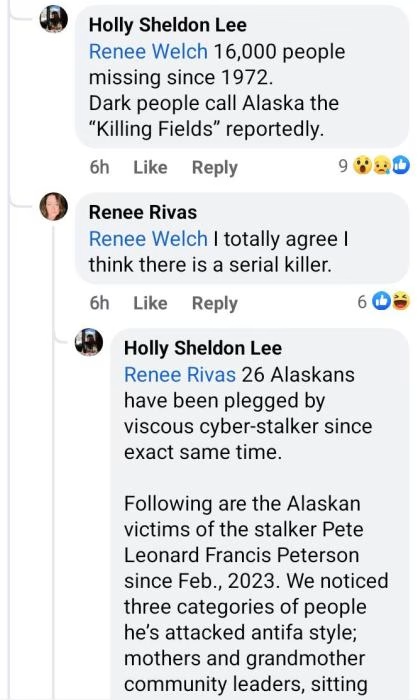
As the lies unraveled and the pressure escalated, I—like many others—became an unintended target of Holly Sheldon Lee’s desperate bid to redirect attention from the real criminals. In one of her more unhinged moments, she falsely connected me to the tragic murders of Sunday Powers and Kami Clark—victims of a drug-fueled operation far beyond anything I could have imagined. But justice has a way of catching up. Federal authorities busted the transnational crime syndicate responsible, exposing a sprawling network of drugs, violence, and blood money. The same names whispered in courtroom shadows and small-town rumor mills were now inked into a 54-person federal indictment. Holly’s fabrications were no longer just outrageous—they were part of an elaborate smokescreen to protect real killers and traffickers. The truth, at last, is finding its way to daylight.
Frequently Asked Questions
Q: Does this mean Ms. Lee’s case is over?
A: No. The Alaska Supreme Court revived parts of her case, meaning it’s going back to the lower court. But some major arguments are now off the table.
Q: What is the “statute of limitations”?
A: It’s the legal deadline for filing a lawsuit. If you miss it, your case can be dismissed—even if you’re right on the facts.
Q: What is “equitable estoppel”?
A: It’s a rule that prevents someone from making a legal argument—like saying you filed too late—if their own actions (like hiding information) caused the delay.
Ms. Lee’s case reminds us of the hard reality in our legal system: timing and technicalities matter. You can be right in principle and still lose in court if you miss your window or fail to meet a burden of proof. That’s why our Founders emphasized both liberty and law—freedom must be paired with accountability and clarity.
As Proverbs 13:12 says, “Hope deferred makes the heart sick, but a longing fulfilled is a tree of life.” Ms. Lee may still have a shot at justice—but it’s a narrow path.
What Ms. Holly Sheldon Got Wrong
1. Strategic Drift: No Clear Litigation Theory
From the jump, Ms. Lee’s case lacked direction. Was she suing for botched mediation advice? Undisclosed conflicts of interest? Emotional duress? Fee overcharging? She threw everything at the wall hoping something would stick. The Supreme Court even noted that she changed legal strategies mid-case, amending her complaint late with a completely different theory (disgorgement of fees).
Why this matters: In high-stakes litigation, focus is power. You can’t win a war when you don’t know which battle you’re fighting. This shotgun approach left her legally vulnerable and diluted the core malpractice allegations.
2. Delay, Delay, Delay: Sitting on Her Hands for Years
She admitted she had doubts about the settlement as early as December 2015, felt “sick to her stomach,” and consulted another attorney in January 2016. That’s legal red-alert territory. And yet, she waited over four years to sue BHBC.
This wasn’t a mystery case. It wasn’t buried in complexity. She knew she was unhappy—and still she waited. The court called this out explicitly: she had more than enough information to take action in 2016.
Why this matters: No judge—especially at the appellate level—is going to bail you out when you sleep on your rights. She handed the statute of limitations defense to BHBC on a silver platter.
3. Emotional Arguments Don’t Win Legal Battles
Let’s be clear: the court was not impressed with Ms. Lee’s reliance on subjective feelings like “being pressured” or “feeling sick” after mediation. She tried to paint her attorneys as passive while she was bullied into a settlement, but the court basically said: you were an adult, represented by counsel, and no one forced you to sign.
Worse, she thanked her attorneys in a text right after the mediation. Try using that as Exhibit A in a malpractice case. It’s a bad look.
Why this matters: Courts demand objective proof. Not feelings. When you base your malpractice claim on your emotions, it’s the legal equivalent of bringing a knife to a gunfight.
4. Conflicts of Interest Allegations = Smoke, Not Fire
She raised red flags about alleged conflicts with her attorneys, including ties to her brother’s business and competing air services. It sounds dramatic—until you look at the record. The court was unconvinced. It found no evidence that these relationships impacted the firm’s representation or her decision-making.
Even worse? She couldn’t tie the alleged concealment of conflicts to any specific delay in her filing. That’s the whole point of equitable estoppel—and she failed to connect the dots.
Why this matters: If you’re going to allege ethical violations, you’d better have a smoking gun. Ms. Lee didn’t even have a matchstick.
5. Procedural Sloppiness: She Litigated Pro Se
Now, let’s address the elephant in the room. Ms. Lee represented herself. Pro se. Against one of Alaska’s most seasoned law firms. That’s like stepping into the octagon against a UFC fighter after watching a few YouTube videos.
It’s no wonder her filings were procedurally clumsy, lacked evidentiary weight, and didn’t meet the legal burdens required to survive summary judgment on key issues like estoppel.
Why this matters: The courtroom isn’t a place to wing it. It’s not a DIY project. If you’re going to sue a high-powered law firm for malpractice, you need a real legal team behind you—not just righteous indignation.

6. Too Many Emails, Not Enough Evidence
She submitted reams of email exchanges with her former attorneys trying to prove they were still representing her beyond their official withdrawal. The court acknowledged the volume—but correctly pointed out that continued casual contact does not equal legal representation.
Her case hinged on proving continuous representation. And instead of strong documentation or billing records, she gave them… Gmail threads.
Why this matters: This is the age of evidence. Courts want receipts—not anecdotes.
After Holly Sheldon Lee’s series of failed restraining order attempts ended in humiliating defeat, her close friend and fellow instigator, Sarah Short, took it upon herself to continue the harassment campaign. Rather than acknowledging the courts’ clear rejection of Holly’s claims, Sarah doubled down—filing her own baseless petitions filled with exaggerated accusations and fabricated “evidence.”
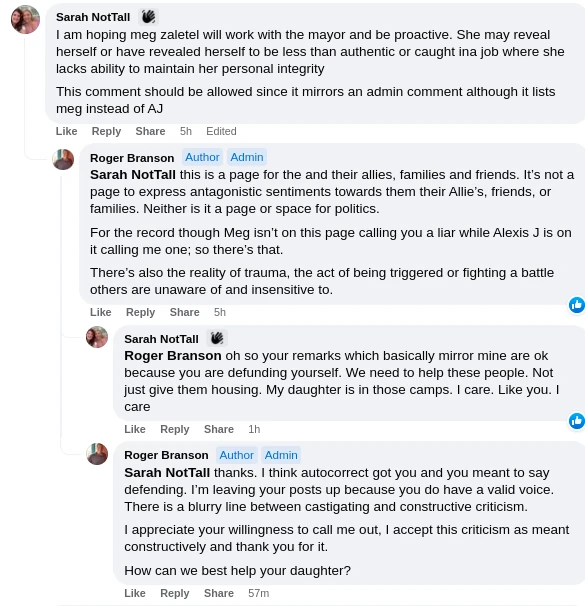
Each time she failed, she returned with new paperwork, treating the courthouse like her personal theater of grievance. This wasn’t about safety—it was about vengeance and narrative control. Even as her daughter struggled with homelessness, Sarah prioritized these legal vendettas over family and truth. Her obsessive filings weren’t isolated acts of concern—they were a coordinated extension of Holly’s smear campaign, weaponizing the court system in an attempt to silence dissent and bury the truth. But like Holly, Sarah underestimated the power of receipts, records, and righteous resistance.
This is her “homeless daughter” speaking
I have been waiting years for someone, anyone to see this womans manipulative ways. She has lied openly about me and to me every single chance she has ever gotten. She did make that facebook and then TOLD ME AND MY SISTER (Jennifer Goodwin Whites blood daughter that she adopted) that her mom, my aunt, was actually alive, she watched us cry for an hour. seriously. she is extremely abusive and has used any means necessary to control those around her.
At the time, I didn’t connect the dots.
I was too busy defending myself against a barrage of restraining orders, social media smears, and outright lies to see the bigger picture. It wasn’t until months later, after the federal indictment dropped naming 54 individuals in a sprawling Alaskan crime ring, that the truth hit me like a punch to the gut: Amber Young—one of the indicted—was Sarah Short’s daughter.
That’s when it all started to make sense. The same Sarah who had filed baseless petitions against me. The same Holly Sheldon Lee who falsely claimed I murdered these women, trying to paint me as the killer. They weren’t just lying—they were desperately redirecting attention away from the real criminals in their orbit. And all the while, I was the one being hauled through courtrooms, vilified in whispers and comments, while the actual ties to violence and organized crime were sitting right there, in their own families.
Tamara Bren and Kevin Peterson were charged with kidnapping and murdering Sunday Powers and Kami Clark near Trapper Creek. The victims were carjacked, brutally killed, and buried in a shallow grave. These senseless acts of violence demonstrate the ruthlessness of the criminal enterprise and the need for swift justice. This author was accused of these murders by Holly Sheldon Lee.
A House of Cards Held Up by One New Rule
The only reason Ms. Lee’s case survives at all is because the Alaska Supreme Court chose to adopt a new rule—the continuous representation doctrine—and gave her the benefit of the doubt on when the attorney-client relationship truly ended.
That’s not a vindication. That’s a judicial Hail Mary. The justices basically said: We’re giving you one more shot, but you’re on thin ice.
What This Case Teaches Us
- Know your deadlines.
- Don’t rely on feelings—use facts.
- Narrow your case theory—don’t throw spaghetti at the wall.
- Hire real legal help. Pro se litigation in complex malpractice cases is suicide.
- If you allege fraud or conflict of interest, bring the proof—not just suspicion.
“My people are destroyed for lack of knowledge.” — Hosea 4:6 (KJV)
Ms. Lee may yet claw her way to a partial victory, but this ruling should be a cold wake-up call for anyone who thinks emotional narratives, slow action, and sloppy filings are enough to take down a major law firm.
If you’re going to play hardball in the legal system, you’d better bring more than bruised feelings. You’d better bring a sledgehammer of truth.

Everything that has followed—the failed restraining orders, the public lies, the harassment campaigns, the chaos she spread like wildfire—can be traced back to one defining pattern: Holly Sheldon Lee has never respected anyone’s boundaries, including her own mother’s. The legal war she waged against her brother over the Sheldon family trust wasn’t just about inheritance; it was a desperate grasp for control and attention, carried out at the expense of family, legacy, and truth.
And now, after torching her family name, betraying her spouse, defaming innocent Alaskans, and weaponizing the court system, where is Holly? According to one disgusted source, she’s holed up in Hawaii with her boyfriend, living off the very people she spent years undermining. Roberta Sheldon deserved better. Alaska deserved better. Holly, on the other hand, deserves every bit of the obscurity she’s bought herself—with other people’s money.
Continuous Representation
How It Revived Holly Sheldon-Lee’s Malpractice Case
Legal rules can sometimes seem abstract, but they can have a very real impact on people’s lives. One such rule – the continuous representation doctrine (also called the continuous representation rule) – recently played a pivotal role in Holly Sheldon-Lee’s legal malpractice case in Alaska. In simple terms, this rule pauses the ticking clock on the time you have to sue your attorney for malpractice while that attorney is still representing you on the same matter. This explainer will break down what the continuous representation doctrine is (with easy examples), how the Alaska Supreme Court adopted it in Holly’s case, how it helped revive her lawsuit that otherwise would have been too late, the court’s reasoning in plain English, and what it means for future legal malpractice cases in Alaska.
What Is a Statute of Limitations? (And Why Does It Matter Here)
Before explaining the continuous representation doctrine, it helps to understand the statute of limitations. A statute of limitations is basically a deadline for filing a lawsuit. For example, if someone is injured or wronged, the law gives them a certain number of years to bring a case. If they file after that deadline, the case is usually dismissed as “time-barred” (meaning it’s too late to be heard).
In Alaska, the time limit to sue a lawyer for malpractice is generally three years (HOLLY SHELDON LEE v. BIRCH HORTON BITTNER INC DAVID GROSS MARA MICHALETZ (2025) | FindLaw). The clock typically starts when the cause of action accrues – in plain language, that’s when the legal claim officially begins (usually when the person is hurt or when they discovered the problem). In Holly Sheldon-Lee’s situation, this deadline was central: if the clock started in 2015 when the alleged malpractice occurred, her 2020 lawsuit would normally be filed too late. This is where the continuous representation rule comes in, potentially changing when that clock starts.
The Continuous Representation Doctrine Explained in Plain Language
The continuous representation doctrine is a legal rule that delays the start of the clock on the time limit to sue your lawyer as long as the lawyer is still representing you in the same matter. In other words, if your attorney continues to work with you on the issue where they might have messed up, the countdown for suing them is put on hold until that representation ends (HOLLY SHELDON LEE v. BIRCH HORTON BITTNER INC DAVID GROSS MARA MICHALETZ (2025) | FindLaw). The idea is that a client shouldn’t have to choose between continuing to trust their lawyer to finish the job and suing that lawyer for a mistake.
Think of it this way with an analogy:
- Doctor Example: Imagine a doctor makes a mistake during a treatment, but you’re still under that doctor’s care. You wouldn’t want to immediately drag the doctor to court while they are in the middle of treating you – you might hope they can fix the mistake. Some laws recognize this and pause the malpractice clock until the treatment is over. The continuous representation rule does the same thing, but for lawyers instead of doctors.
- Contractor Example: Suppose you hire a contractor to renovate your kitchen. Midway, you realize they installed something incorrectly. Instead of suing them on the spot, you give them a chance to correct it while they’re still on the job. If the law has a rule like continuous representation, the timeframe to sue the contractor for that mistake wouldn’t start until the project (their work for you) is finished. Likewise, with an attorney, if they’re still working on your case, you don’t have to sue them the moment you suspect an error – you can wait until their services on that matter conclude.
In simpler terms, the continuous representation doctrine says: as long as your lawyer keeps representing you on the matter where the potential malpractice happened, the clock for suing that lawyer is on pause. The clock only starts ticking when the representation on that matter is over (HOLLY SHELDON LEE v. BIRCH HORTON BITTNER INC DAVID GROSS MARA MICHALETZ (2025) | FindLaw). This rule exists to protect clients from being forced into a corner – it prevents the scenario of “sue your lawyer now or forever lose your chance, even though they’re still working for you.”
Why is this helpful? It recognizes that clients often stick with their lawyers to try to resolve issues. Suing your lawyer while your case is still ongoing can wreck the relationship and possibly your case. So, the rule gives you breathing room: you can finish the case (with the lawyer’s continued help) and then decide about a malpractice claim without the legal deadline expiring in the meantime.
Important Note: This doesn’t give unlimited time to sue. It shifts the starting point of the limitation period. Once the attorney’s representation on that matter ends, the usual countdown (three years in Alaska for legal malpractice) begins. The client still has to file within that standard period after the end of representation.
Holly Sheldon-Lee’s Case: A Brief Background
To understand how the continuous representation rule helped Holly Sheldon-Lee, let’s first look at her situation:
- The Underlying Dispute: Holly Sheldon-Lee was involved in a complicated family dispute over a property (a mountain cabin) and a family trust. In 2014, she hired an Anchorage law firm, Birch Horton Bittner & Cherot (BHBC), to represent her and her small airline business in a lawsuit against her brother over the trust. Two BHBC attorneys, David Gross and Mara Michaletz, handled her case.
- Mediation in 2015: In December 2015, the feud went to mediation (a meeting where parties try to settle with the help of a neutral mediator). This mediation is where Holly claims her lawyers committed malpractice. She says BHBC failed to advocate for her interests – for example, not ensuring she understood the mediator’s proposal and not protecting her from pressure during mediation – which led her to sign an unfavorable settlement agreement. Essentially, she felt forced into a bad deal because her lawyers didn’t do their job properly.
- After the Mediation: Holly was unhappy with the outcome. In 2016, she brought in a new lawyer (substituting attorney Brecht for BHBC for part of the case) and tried to challenge the settlement. BHBC formally withdrew as her personal attorney around December 2015 (after the mediation) or early 2016 when the new lawyer took over for Holly, but BHBC remained involved as the attorney of record for Holly’s company (SAS) in the case and continued some communications (HOLLY SHELDON LEE v. BIRCH HORTON BITTNER INC DAVID GROSS MARA MICHALETZ (2025) | FindLaw) (HOLLY SHELDON LEE v. BIRCH HORTON BITTNER INC DAVID GROSS MARA MICHALETZ (2025) | FindLaw). Emails show that BHBC’s attorney (Gross) kept in touch with Holly even after the switch, discussing case matters into 2016 and 2017, and providing occasional advice on related issues (HOLLY SHELDON LEE v. BIRCH HORTON BITTNER INC DAVID GROSS MARA MICHALETZ (2025) | FindLaw) (HOLLY SHELDON LEE v. BIRCH HORTON BITTNER INC DAVID GROSS MARA MICHALETZ (2025) | FindLaw). (For example, in June 2017, Gross was still offering Holly advice about a judgment and potential claims involving her business (HOLLY SHELDON LEE v. BIRCH HORTON BITTNER INC DAVID GROSS MARA MICHALETZ (2025) | FindLaw).) The exact end date of BHBC’s representation wasn’t crystal clear.
- Holly Files a Malpractice Lawsuit (2020): On February 11, 2020, Holly Sheldon-Lee (representing herself, pro se) filed a lawsuit against BHBC and the two attorneys, claiming legal malpractice. This was over four years after the December 2015 mediation where the alleged negligence occurred. In her complaint, she laid out how she believed the firm had mishandled the mediation and had conflicts of interest that hurt her case.
- The Law Firm’s Defense – “You sued too late”: The BHBC firm responded by asking the court to dismiss the case, arguing that Holly’s claim was filed after the three-year deadline and thus was time-barred. They pointed to possible accrual dates: December 2015 (when the mediation happened), or December 29, 2015 (when Holly’s new lawyer officially replaced BHBC for her personally), or August 2016 (when the trial court upheld the settlement in spite of Holly’s objections). No matter which of those dates, February 2020 was more than three years later. So, under the normal rule, Holly missed the window.
- Holly’s Argument – “The clock hadn’t started yet”: Holly fought back, invoking the continuous representation doctrine. She argued that because BHBC continued to represent her (in some capacity) well into 2017, the countdown for the statute of limitations didn’t start until that representation fully ended (HOLLY SHELDON LEE v. BIRCH HORTON BITTNER INC DAVID GROSS MARA MICHALETZ (2025) | FindLaw). By her view, the firm was still on the case through at least mid-2017, so her February 2020 filing would be within three years of that. She also claimed BHBC had concealed conflicts of interest (for example, that the firm had ties to people on the other side of the dispute) and therefore shouldn’t be allowed to use the time limit as a defense.
- Trial Court Dismisses Holly’s Case: The Alaska superior (trial) court wasn’t persuaded by Holly’s arguments. It granted summary judgment to BHBC, essentially agreeing that the lawsuit was filed too late and cutting the case off before trial (HOLLY SHELDON LEE v. BIRCH HORTON BITTNER INC DAVID GROSS MARA MICHALETZ (2025) | FindLaw). The court also denied Holly’s attempt to amend her complaint to add the conflict-of-interest claims. Holly’s malpractice case seemed dead in the water at that point.
Holly did not give up – she appealed to the Alaska Supreme Court. Her appeal focused on the continuous representation rule (and some other issues), setting the stage for the state’s highest court to consider whether Alaska should formally adopt this doctrine and give Holly’s claim new life.
How the Continuous Representation Rule Saved Holly’s Lawsuit
The Alaska Supreme Court’s decision, issued in March 2025, was a turning point for Holly Sheldon-Lee. The court agreed with Holly’s key argument about continuous representation and, in doing so, revived her lawsuit. Here’s how:
- Adopting the Rule in Alaska: The Alaska Supreme Court announced that it was officially adopting the continuous representation rule for legal malpractice cases in Alaska (HOLLY SHELDON LEE v. BIRCH HORTON BITTNER INC DAVID GROSS MARA MICHALETZ (2025) | FindLaw). The justices noted that they had hinted in past cases that this rule had merit, but they had never actually needed to decide it before (HOLLY SHELDON LEE v. BIRCH HORTON BITTNER INC DAVID GROSS MARA MICHALETZ (2025) | FindLaw). In Holly’s case, it made a difference – if the rule applied, her claim would be timely. So the court took this opportunity to embrace the rule, stating: “We now hold that the continuous representation rule applies in Alaska to determine when a legal malpractice claim accrues.” (HOLLY SHELDON LEE v. BIRCH HORTON BITTNER INC DAVID GROSS MARA MICHALETZ (2025) | FindLaw) In practical terms, this meant Alaska law would now recognize that the clock for the malpractice time limit doesn’t start while the attorney is still representing the client on the same matter.
- What the Rule Meant for Holly: By adopting this rule, the Supreme Court opened the door for Holly’s case to be considered on the merits. They explained that if BHBC’s representation of Holly continued into 2017 (as she claimed), then her February 2020 filing was indeed within three years of the end of that representation and therefore on time (HOLLY SHELDON LEE v. BIRCH HORTON BITTNER INC DAVID GROSS MARA MICHALETZ (2025) | FindLaw). The key question became: when did the attorney-client relationship regarding that matter actually end? BHBC argued it ended in 2015 or at the latest 2016, whereas Holly pointed to ongoing contacts into 2017. The Supreme Court found there was a “genuine factual dispute” about this – meaning reasonable people could disagree on the timeline, given the evidence of emails and involvement by BHBC even after new counsel took over (HOLLY SHELDON LEE v. BIRCH HORTON BITTNER INC DAVID GROSS MARA MICHALETZ (2025) | FindLaw).
- Reversing the Dismissal: Because of that factual dispute and the newly adopted rule, the Supreme Court reversed the summary judgment that had thrown out Holly’s case. In plain English, they undid the lower court’s decision to dismiss the case as time-barred. Holly’s claim was no longer considered too late under the law, thanks to the continuous representation doctrine.
- A Second Chance to Prove Her Case: The Supreme Court sent the case back to the lower court for further proceedings. Holly will get the chance to prove when BHBC’s representation truly ended and, if the case proceeds to trial, to prove that the attorneys committed malpractice in the mediation. The lower court can no longer simply toss the case for being filed too late without first sorting out when the attorney-client relationship ended under the continuous representation rule.
- Other Issues Revived: Not only did the rule breathe life into her malpractice claim, but the Supreme Court also said Holly should be allowed to amend her complaint to add the claims about BHBC’s conflicts of interest (something the trial court had denied before). This means she can also pursue a refund of fees paid to the firm due to the alleged undisclosed conflicts. (The Supreme Court did reject Holly’s argument that BHBC’s alleged hiding of conflicts should completely stop the firm from using the statute of limitations defense – because she couldn’t show she delayed suing because of that concealment. In short, the continuous representation rule, not the conflict issue, was the real key that unlocked her case.)
In summary, the continuous representation doctrine transformed Holly Sheldon-Lee’s case from a lost cause (due to an expired deadline) into a live controversy that she can now litigate. Without this rule, her case would have remained dismissed; with it, she gets a shot at justice.
The Alaska Supreme Court’s Reasoning (In Plain English)
The Supreme Court’s decision to adopt the continuous representation rule didn’t come out of thin air. They gave clear, commonsense reasons for why this rule makes sense. Here’s a breakdown of why the court embraced this doctrine, in straightforward terms:
- Maintaining Trust in the Attorney-Client Relationship: The court recognized that the relationship between a client and their attorney relies on trust and confidence (HOLLY SHELDON LEE v. BIRCH HORTON BITTNER INC DAVID GROSS MARA MICHALETZ (2025) | FindLaw). Forcing a client to sue their lawyer while the lawyer is still actively handling the case would shatter that trust. It puts the client in a terrible dilemma: Do I keep trusting this lawyer to finish my case, or do I sue them now for messing up, knowing that suing will likely end our working relationship? The continuous representation rule avoids this no-win situation (HOLLY SHELDON LEE v. BIRCH HORTON BITTNER INC DAVID GROSS MARA MICHALETZ (2025) | FindLaw). It lets the client continue with the same attorney without losing the right to sue later. The Alaska Supreme Court felt it was important not to put clients in a position where they have to choose between an effective ongoing representation and their right to hold the lawyer accountable for mistakes.
- Giving Attorneys a Chance to Fix Their Mistakes: Everyone can make mistakes – lawyers included. The court noted that if a lawyer did slip up, it might be possible for them to correct or mitigate the error as the case continues (HOLLY SHELDON LEE v. BIRCH HORTON BITTNER INC DAVID GROSS MARA MICHALETZ (2025) | FindLaw). The continuous representation rule encourages a scenario where the lawyer can attempt to make things right. For example, if an attorney missed a deadline or made a strategic error, they might be able to find a solution or reduce the harm while the case is still ongoing. By allowing the representation to continue without the client immediately filing a lawsuit, the rule benefits both sides: the client might avoid harm altogether if the lawyer fixes the issue, and if not, the client still retains the right to sue later. This can also cut down on “what if” lawsuits – a client might hold off on suing because the problem was fixed, which means fewer unnecessary malpractice suits clogging the courts (HOLLY SHELDON LEE v. BIRCH HORTON BITTNER INC DAVID GROSS MARA MICHALETZ (2025) | FindLaw).
- Clients Often Can’t Judge a Lawyer’s Performance Until It’s Over: The justices also pointed out that while a case is ongoing, a client may not be in a good position to know if their lawyer is doing a good job or not (HOLLY SHELDON LEE v. BIRCH HORTON BITTNER INC DAVID GROSS MARA MICHALETZ (2025) | FindLaw). Lawsuits and legal matters can be complex, and clients usually rely on their attorney’s expertise. If something goes wrong in the middle, the client might not immediately realize it was malpractice – it might only become clear later, perhaps when the case ends or a result comes out. The continuous representation rule acknowledges this reality: it doesn’t punish clients for not suing fast enough when they might not even realize a mistake happened or how serious it is until the dust settles. It’s a fair approach because it accounts for the knowledge gap and trust that clients place in their attorneys during an ongoing case.
- Preventing Lawyers from Running Out the Clock: Another practical reason for the rule is to remove any incentive a lawyer might have to drag a case on just to beat the clock on a malpractice claim. In theory, without this rule, an unscrupulous attorney who knows they messed up could try to string the case along until the statute of limitations expires, after which the client couldn’t sue them. That’s obviously not in the client’s interest (and it’s not how most attorneys behave, but the law has to consider the possibility). By tolling (pausing) the time limit during the continuous representation, the law ensures that a lawyer can’t avoid accountability simply by stalling.
- It’s Fair and It’s Allowed: The court summed up that the doctrine is fair to all parties – “The attorney has the opportunity to remedy or mitigate the damages. The client is not forced to end the relationship… This result is consistent with the purpose of the statute of limitations.” (HOLLY SHELDON LEE v. BIRCH HORTON BITTNER INC DAVID GROSS MARA MICHALETZ (2025) | FindLaw). In other words, it strikes a good balance: it doesn’t unfairly harm attorneys or clients. The court also addressed whether it was within their power to adopt this rule. Some courts in other states worried that changing time-limit rules should be left to the legislature. The Alaska Supreme Court disagreed, explaining that deciding when a claim “accrues” (starts) has always been a role for the courts when the statutes aren’t specific (HOLLY SHELDON LEE v. BIRCH HORTON BITTNER INC DAVID GROSS MARA MICHALETZ (2025) | FindLaw). Alaska’s legislature hadn’t explicitly defined when a legal malpractice claim accrues, so the court said it was within its authority to clarify that by adopting the continuous representation rule (HOLLY SHELDON LEE v. BIRCH HORTON BITTNER INC DAVID GROSS MARA MICHALETZ (2025) | FindLaw). They likened it to the already accepted “discovery rule,” which Alaska courts use to allow lawsuits to be filed within a certain time after the injured person discovers the injury, even if that’s later than when the injury actually happened (HOLLY SHELDON LEE v. BIRCH HORTON BITTNER INC DAVID GROSS MARA MICHALETZ (2025) | FindLaw). If courts can adjust timing with the discovery rule, they certainly can with continuous representation as well (HOLLY SHELDON LEE v. BIRCH HORTON BITTNER INC DAVID GROSS MARA MICHALETZ (2025) | FindLaw). Furthermore, the court noted that existing doctrines like fraudulent concealment or estoppel (which pause the statute of limitations in cases of deliberate hiding of wrongdoing) were not enough to address the concerns that continuous representation covers (HOLLY SHELDON LEE v. BIRCH HORTON BITTNER INC DAVID GROSS MARA MICHALETZ (2025) | FindLaw) – because continuous representation is about allowing repair of mistakes without any fraud having taken place. The rule is a narrow, sensible exception that respects the special nature of the attorney-client relationship (HOLLY SHELDON LEE v. BIRCH HORTON BITTNER INC DAVID GROSS MARA MICHALETZ (2025) | FindLaw).
In short, the Alaska Supreme Court’s reasoning was rooted in common sense and fairness: Let the client-lawyer relationship play out without forcing premature legal action, give the lawyer a chance to fix issues, and only start the countdown when that working relationship is over. By adopting this approach, the court aimed to ensure justice isn’t defeated by a technical time limit when a client was diligently continuing with their attorney.
Implications for Future Legal Malpractice Cases in Alaska
The adoption of the continuous representation doctrine in Alaska through Holly Sheldon-Lee’s case is a significant development. It brings Alaska in line with many other states that already follow this rule (HOLLY SHELDON LEE v. BIRCH HORTON BITTNER INC DAVID GROSS MARA MICHALETZ (2025) | FindLaw), and it has several important implications for both clients and lawyers going forward:
- Clients Have More Protection: If you are a client in Alaska and your attorney continues to represent you on a matter, you won’t be forced to file a malpractice lawsuit while that representation is ongoing just to beat the clock. You can focus on the case at hand without the panic of “sue now or lose your rights.” This is especially helpful for clients who might sense something went wrong but hope their lawyer can still set things right. Now, Alaskans can allow the case to conclude and then, if necessary, file a malpractice claim within three years after the representation ends (HOLLY SHELDON LEE v. BIRCH HORTON BITTNER INC DAVID GROSS MARA MICHALETZ (2025) | FindLaw). It’s a safety net that prevents the legal deadline from expiring simply because you chose not to disrupt an ongoing case with a malpractice suit.
- Lawyers Can Attempt to Fix Issues (But Can’t Hide From Mistakes): For attorneys, the continuous representation rule is a bit of a double-edged sword. On one hand, it encourages attorneys to address and correct any errors because the case isn’t immediately going to turn into a malpractice lawsuit. Conscientious lawyers already try to fix mistakes; now they can do so knowing the client isn’t suing them simultaneously. On the other hand, lawyers can’t avoid liability just by dragging a case out. They should also be mindful that the longer they continue representation after a potential mistake, the longer the clock stays paused – meaning the client’s window to sue extends correspondingly. In Alaska, attorneys might now be more careful to formally end their representation when appropriate, especially if the relationship has deteriorated or after a case concludes, so that the statute of limitations can begin to run. Simply put: the end date of representation becomes crucial. Lawyers will likely document in writing when their services for a matter are terminated (for example, with a disengagement letter or a substitution of counsel filing), to have a clear record.
- Clarity in Attorney-Client Separation: This ruling will encourage clear communication about when an attorney’s work for a client is over. As seen in Holly’s case, ambiguity about whether BHBC was still representing her (due to ongoing emails and being attorney of record for her company) led to a factual dispute (HOLLY SHELDON LEE v. BIRCH HORTON BITTNER INC DAVID GROSS MARA MICHALETZ (2025) | FindLaw). In the future, both clients and lawyers in Alaska may be more explicit about ending the representation. For instance, if a client hires a new lawyer or the case is effectively over, the original lawyer might explicitly withdraw or confirm that their job is done. This clarity benefits everyone: the client knows the representation has ended (and that their time limit for any claim will start), and the lawyer knows that too.
- More Cases Might Invoke the Rule: We can expect that in legal malpractice lawsuits going forward, Alaska plaintiffs (clients) will invoke the continuous representation doctrine whenever there’s a question about timing. If a malpractice claim is filed and the alleged error happened more than three years ago, the client’s attorney will likely ask: “Did the original lawyer keep representing the client beyond that point?” If yes, this rule could make the lawsuit timely. We might see fewer cases dismissed purely on technical timing grounds without examining whether the representation was ongoing. Judges in Alaska will now apply this precedent: they will look at when the attorney’s work on the matter truly ended to decide when the clock started (HOLLY SHELDON LEE v. BIRCH HORTON BITTNER INC DAVID GROSS MARA MICHALETZ (2025) | FindLaw).
- Still a Need to Be Vigilant: While the rule provides additional protection, clients shouldn’t become complacent. Once your lawyer finishes working on the matter (for example, your case is closed or they formally withdraw), the clock starts ticking. The three-year statute of limitations is still the law (HOLLY SHELDON LEE v. BIRCH HORTON BITTNER INC DAVID GROSS MARA MICHALETZ (2025) | FindLaw). Clients should act within that period. The doctrine doesn’t extend the deadline beyond what is standard; it only shifts the timeline. Also, the rule applies to the same matter in which the malpractice occurred – so if you hire the lawyer for a completely unrelated issue later, that likely doesn’t keep the clock paused for the old issue.
- A Fair Balance: Overall, this change is seen as bringing Alaska’s approach in line with a fair balance that other jurisdictions have found useful. It prioritizes the client’s ability to obtain effective legal help and remedies over a harsh cutoff date. As the Alaska Supreme Court put it, the rule is “fair to all concerned parties” and aligns with the purposes of time limits in the law (HOLLY SHELDON LEE v. BIRCH HORTON BITTNER INC DAVID GROSS MARA MICHALETZ (2025) | FindLaw). We now have a clear message in Alaska: finish the representation first, accountability can be determined after, in due time.
The continuous representation doctrine may sound technical, but as Holly Sheldon-Lee’s story illustrates, it can make the difference between a dismissed case and a chance to seek justice. The Alaska Supreme Court’s adoption of this rule in 2025 is a client-friendly move that acknowledges real-world relationships and encourages lawyers to resolve issues. For Alaskans (especially older clients worried about trusting their lawyers and running out of time), this decision provides reassurance that the law won’t punish you for sticking with your lawyer a little longer. It’s a nuanced rule, but at its heart it’s about fairness and trust – ensuring that the legal system doesn’t turn a blind eye to wrongdoing just because of a ticking clock that started too soon, and that clients and attorneys can focus on fixing problems first before battling in court.
Holly Sheldon-Lee may still be responsible for paying past legal fees to Birch Horton Bittner & Cherot (BHBC), unless she successfully proves her malpractice and fee disgorgement claims in court.
What Happened with the Fees
- Holly already paid BHBC for legal services during the original trust litigation, including the mediation where she claims malpractice occurred.
- In her 2020 lawsuit, Holly sought not just damages, but also a refund of those legal fees (called “disgorgement”) based on alleged malpractice and undisclosed conflicts of interest.
- The superior court blocked her from amending her complaint to include that claim for fee disgorgement.
- But the Alaska Supreme Court reversed that, saying the trial court should have allowed Holly to add those claims and that they deserve to be fully heard.
So… Does She Still Have to Pay?
At this point:
- Yes, she still owes whatever she previously paid, because no court has yet ruled that BHBC must refund her fees.
- However, she now has a second chance to make her case in court — both that they committed malpractice and that they should give the money back because they didn’t disclose serious conflicts of interest.
- If she wins on the amended claims, the court could order BHBC to disgorge (return) the fees.
So her payment obligation stands for now — but it could change if she proves her case.
Important Context
Even if Holly wins partial relief on malpractice, it doesn’t automatically mean full refund of all fees. Courts usually consider:
- Whether any services BHBC provided were actually valuable or used;
- Whether conflicts of interest were material and intentionally hidden;
- How much the firm benefitted unjustly, if at all.
If she loses on all counts, then she will remain responsible for all fees already paid, and possibly even owe more (e.g. court costs or sanctions, though none have been ordered yet).
Holly might get a refund — but only if she proves malpractice and/or serious ethical violations in court. Until then, the default is yes, she still has to pay.
From Courtrooms to Kauai Holly Sheldon Lee Flees Alaska
And where is Holly Sheldon Lee now, after all the lawsuits, lies, and lives she’s tried to ruin? According to one source who had the misfortune of dealing with her, she’s fled Alaska altogether—hiding out in Hawaii while still leeching off the people she betrayed. It’s a poetic kind of cowardice: she sowed chaos across Southcentral Alaska, turning neighbors into enemies, dragging good people into courtrooms, and torching every bridge she ever stood on. And now? She’s sipping Mai Tais in Maui while honest Alaskans clean up the mess she left behind. For someone who claimed to be a victim, Holly certainly cashed in like a villain. But karma doesn’t need a passport—and sooner or later, even paradise runs out of places to hide.
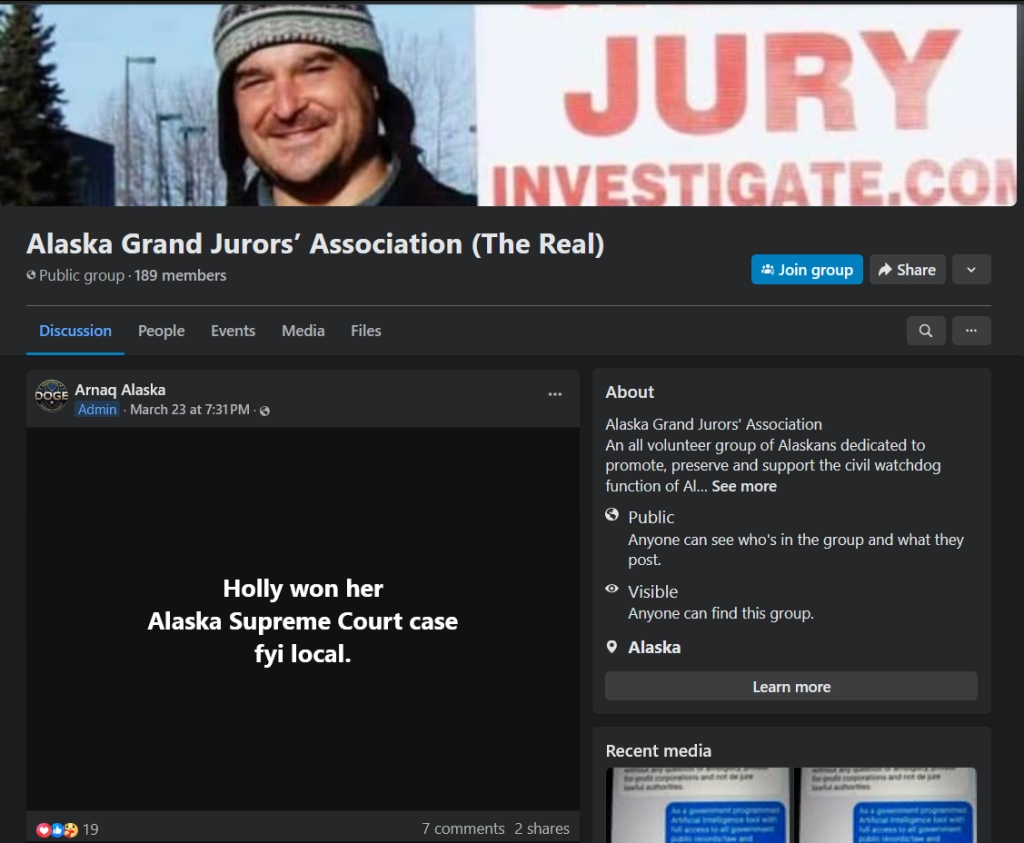
Correction & Update
Regarding Comments Attributed to Holly
Editor’s Note (May 2025): Following a detailed internal review and server log analysis, we are issuing this correction and clarification regarding two public comments submitted in connection with this article and its related coverage of Holly Sheldon-Lee.
False Identities and Coordinated Disinformation
Two comments were submitted to this website in March and April 2025. Both comments contained emotionally charged allegations aimed at individuals connected to the Sheldon family trust dispute and related legal actions involving Ms. Holly Sheldon-Lee.
After examining visitor logs, browser fingerprints, IP addresses, and device metadata, we have strong reason to believe these comments were authored or coordinated by Holly Sheldon-Lee herself, or someone acting under her direction.
Forensic Details
1. Person A Comment
- Date/Time: Monday, March 24, 2025 – 7:56 PM AKDT
- IP Address:
216.137.205.59 - Location: Wasilla, Alaska
- ISP: MTAONLINE-AS
- Device: Samsung Galaxy A15 5G
- URL Accessed:
/general-business/sheldon-air-service-sheldon-family-trust-battle-for-inheritance/
This comment contained unverifiable personal anecdotes and echoed language used by Ms. Sheldon-Lee in court filings and transcripts. No person by the given named has been verified.
2. Person B Comment
- Date/Time: Tuesday, April 15, 2025 – 11:50 PM AKDT
- IP Address:
174.204.98.141 - ISP: Verizon Wireless (CELLCO-PART)
- Device: Samsung Galaxy A14 5G
- URL Accessed:
/opinion/holly-sheldon-lees-legal-losses-breakdown-of-setbacks-alaska-supreme-court-case/
This comment made egregious claims of a sex trafficking “compound” involving attorneys allegedly connected to Holly Sheldon-Lee. No evidence supporting these claims exists, and the “attorneys” named were never under any known investigations.
Pattern of Misrepresentation
Both comments shared these characteristics:
- Submitted immediately after reading articles related to Holly Sheldon-Lee.
- Written in a similar tone with emotionally manipulative framing.
- Used mobile devices in the Samsung Galaxy A-series.
- Came from ISPs (MTAOnline, Verizon Wireless) that correlate with past known connections to Ms. Sheldon-Lee’s activity.
Given this pattern, and the absence of public records substantiating the existence of these personas, we conclude they were likely fabricated to simulate public support for Ms. Sheldon-Lee and discredit factual reporting.
Our Commitment to Truth
These comments and details based on them have since been removed. We take misinformation seriously. Alaska.Report does not and will not allow the use of false identities to manipulate public perception or obstruct accountability.
“Fabricating support to distort public understanding is not only dishonest—it’s dangerous. We stand by our reporting and will continue to expose such tactics when they surface.”
—Editor-in-Chief
If you are a reader who was misled by these sources, we encourage you to revisit the facts presented in the original article and make your own informed judgment based on the legal record—not online theatrics.


It’s honestly so messed up that Holly Sheldon Lee is still hellbent on defying her own mother’s wishes. Roberta Sheldon spent her life building a legacy for her family and community, and she made her intentions crystal clear in her will—she chose Robert as trustee for a reason. That should’ve been the end of it. But instead of honoring her mother’s memory, Holly dragged the whole family into court, threw mud at anyone who didn’t bend to her ego, and tore open wounds that should’ve been left to heal. It’s heartbreaking. How do you claim to love someone while actively disrespecting their final, carefully thought-out decisions? Will Roberta’s wishes ever be honored? Not if Holly keeps putting herself above the very legacy she was entrusted to uphold.
As Pete’s wife, and someone who has watched all of this unfold far too closely, I have to say—Holly’s behavior is nothing short of disgraceful. It’s like watching a petty child throw tantrums because she didn’t get her way, only the consequences are real people’s lives and legacies. I believe deeply in honoring people’s wishes, especially when they’re no longer here to defend themselves. Roberta Sheldon made her intentions clear, and instead of respecting that, Holly turned her grief into a selfish power grab. It’s heartbreaking to see someone twist family, community, and trust into tools of control. Holly, your mother deserved better than this. We all did.
Please keep my name confidential
Please don’t use my name or husband. Refer to me as a source. Thank you